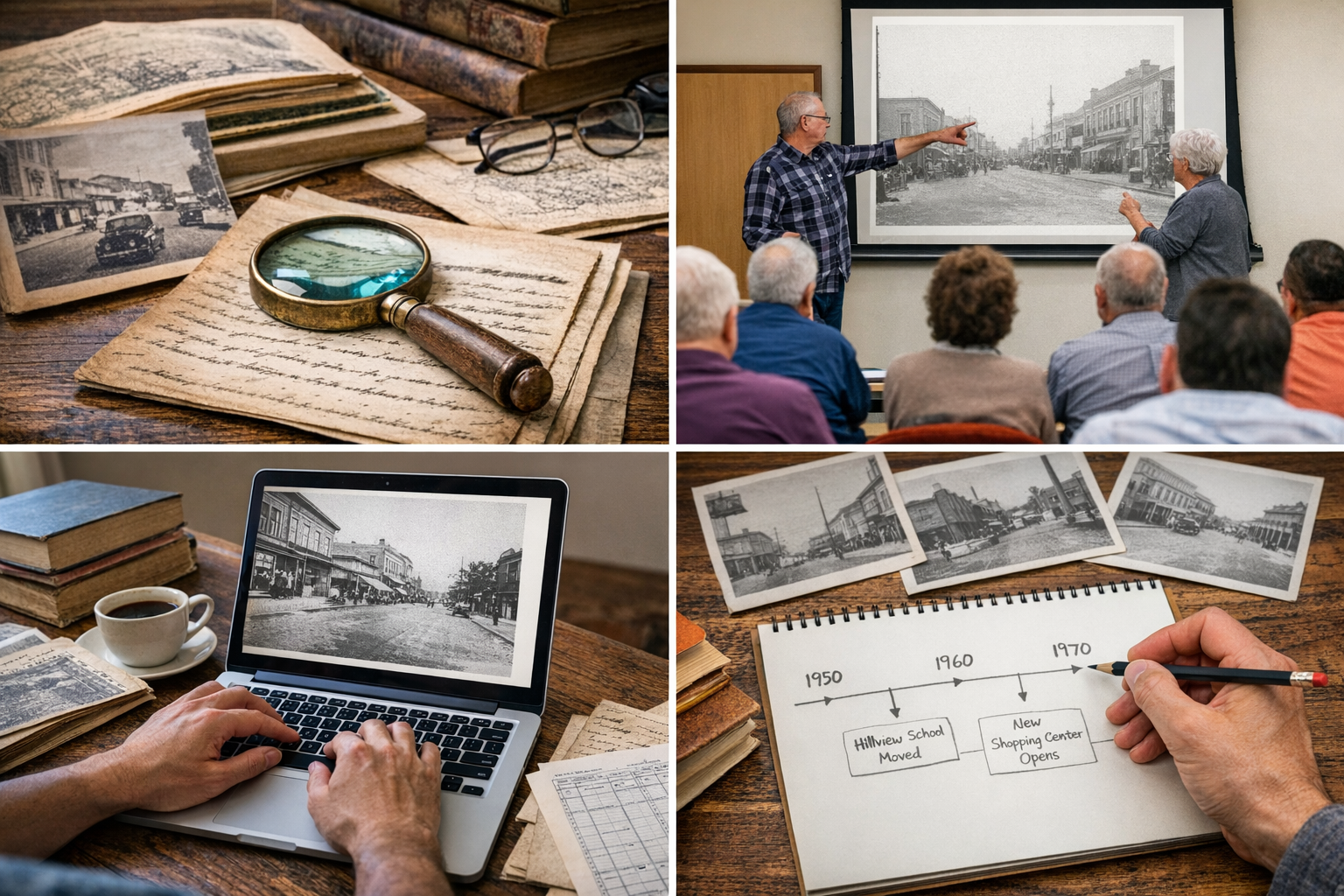
Historical research is not only for academics. With a clear question and a few simple methods, anyone can investigate the past of their street, school, or town and uncover stories that still shape daily life today. Just as literary historians explore what Defines a Powerful Russian Historical Fiction, local researchers can uncover the deeper forces that shape everyday places.
Why Historical Research Matters For Your Local Community
Local history explains why your neighbourhood looks and feels the way it does. Street names, building styles, parks, and even bus routes often come from decisions made decades ago. Studying these choices helps you see how earlier generations solved problems and argued about change, much like authors examine emotional depth in stories such as The Rise of Emotional Suspense Ebooks.
As a beginner historian, you can answer realistic questions. You might trace when a market first opened, why a school moved buildings, or how a festival began. These focused projects build skills in source evaluation and contextual analysis without becoming overwhelming.
A small local history project also supports community memory. Your findings can feed into school work, family stories, or a local history project run by a historical society. When you share clear evidence, you help neighbours understand their shared past.
Choosing A Manageable Historical Question To Investigate
Start from a broad curiosity such as why is this neighbourhood called Hillview. Narrow it into a research question like how did the name of Hillview change between 1950 and 1980 and what events caused the change. This keeps your work focused and achievable.
Define three things clearly. Place might be one street, one estate, or one school. Time might be a single decade or the years between two key events. People might be shop owners, factory workers, or pupils. Tight limits stop your project from spreading too wide.
Check that your question is answerable. Ask whether there are likely to be records such as a newspaper archive, council minutes, school magazines, or maps. If you cannot think of any possible sources, adjust the question until you can imagine where evidence might appear.
Finding Your First Historical Sources Online And Nearby
Your local library is often the best starting point. Use the library catalog to search for your street, school, or town. Many libraries hold a local archive with maps, photographs, council records, and newspaper clippings. Historical societies may keep pamphlets and local history books that are not available elsewhere.
Online, look for reliable collections run by libraries, universities, museums, or government bodies. These often include digitised newspaper archives, old maps, census records, and photographs. Avoid random blogs unless they clearly cite primary sources and respected secondary sources.
Librarians and archivists are partners in your project. Instead of saying I want to know everything about my town, ask specific questions such as I am researching a cinema on King Street between 1930 and 1960. What records or indexes should I check. This makes it easier for staff to guide you.
Reading Historical Sources Like A Beginner Historian
Primary sources are materials created at the time you are studying such as letters, diaries, maps, council minutes, photographs, and oral history interviews. Secondary sources are later works like textbooks, documentaries, and local history books that interpret those primary materials. This same distinction applies when studying broader themes found in Top Russian Political Fiction, where historical context shapes narrative meaning.
Use a simple three-step method to read any document. First observe by scanning the item and noting what it is, who created it, and when. Next describe by listing key facts, names, dates, and places. Finally interpret by asking what this might mean in context and whose voices are missing.
Different sources often disagree. A town anniversary booklet might praise an event while a newspaper article from the same week reports protests. Instead of choosing one as correct, compare them. Ask who wrote each, for which audience, and with what purpose. The disagreement itself becomes part of your historical explanation.
Turning Notes Into A Simple Historical Story
Take careful notes as you work. For every item record full details such as author, title, date, collection name, and link or shelf mark. Then group your notes by theme, such as opening dates, ownership changes, or community reactions. Patterns and gaps will start to appear.
Build a basic timeline to check cause and effect. For example, a student might use a local library newspaper archive, a city directory, and an old map to trace when a historic cinema opened, when it closed, and what replaced it. Dates on your timeline help you see whether events followed economic change, new laws, or shifts in population.
Turn your findings into a short story that clearly answers your research question. Separate fact from interpretation by stating which points come directly from primary sources and which are your conclusions. Share your work through a school presentation, a community newsletter article, a simple web page, or a poster in a local venue.
FAQs
What is the first step to start historical research as a complete beginner
Begin by choosing a very small and clear topic. Define one place, a short time period, and a group of people or a single building. Turn this into a simple research question, then visit your local library or trusted online collections to see what primary and secondary sources exist for that topic.
Where can I find reliable primary sources for local history
Reliable primary sources are usually held by local libraries, archives, museums, and historical societies. Look for collections of maps, photographs, council minutes, school records, and newspaper archives. Many institutions now provide digitised materials through their websites.
How do I know if I am interpreting a historical source correctly
Check your interpretation against other sources and ask basic questions about who created the item, when, why, and for whom. If a second source supports or challenges your reading, adjust your view. When possible, discuss your ideas with a librarian, teacher, or local historian.